
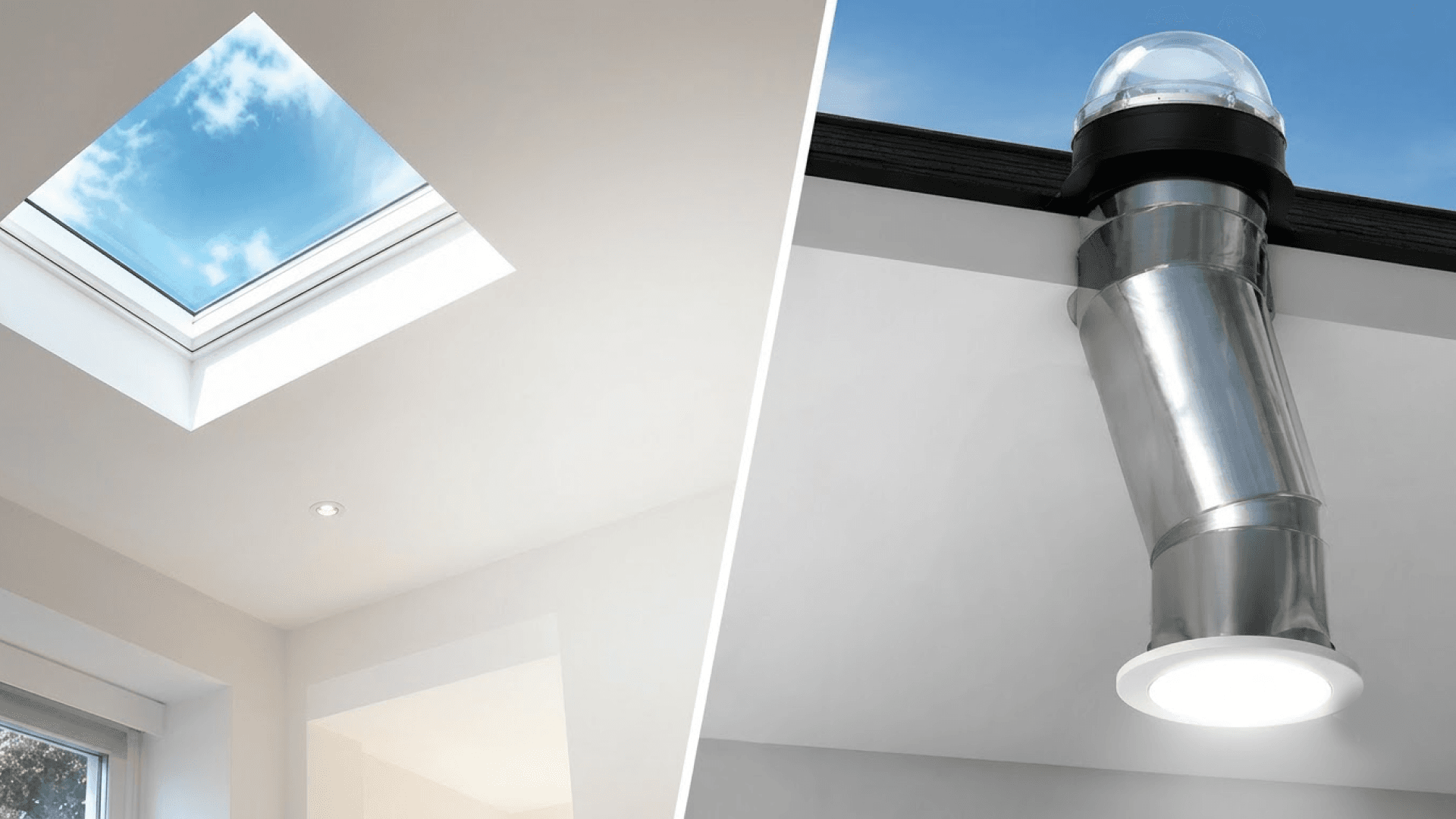
A skylight is a glazed roof opening that delivers direct sunlight and outdoor views, while a light pipe (also called a tubular daylighting device) captures sunlight through a small roof dome and channels it through a reflective tube to a diffuser below. lightpipes are generally more energy-efficient and easier to install; skylights offer more light volume, sky views, and architectural impact. The right choice depends on the room, the roof, and your energy goals.
Choosing between the two isn't just an aesthetic decision. It affects heating and cooling loads, installation cost, roof integrity, and how much artificial lighting a space still needs during the day. Below, we break down how each system works, where each one wins, and how to decide with confidence.
What Is a Skylight?
A skylight is a fixed or operable glazed unit installed directly into a roof structure, similar to a window laid flat or at an angle. It sits above the room it lights, usually requiring a fully framed opening, flashing, and sometimes a light shaft if the roof and ceiling aren't the same plane.
Skylights are one of the oldest and most recognizable natural daylighting solutions in residential and commercial construction. They're common in kitchens, stairwells, lobbies, and open-plan living areas where both light and sky visibility matter.
How Skylights Work
Sunlight passes straight through the glazing into the interior. There's no redirection or diffusion involved, which is why light intensity, heat, and glare all vary with the sun's position and the time of day. High-quality units use double- or triple-pane glazing, low-E coatings, and UV-blocking laminates to manage heat gain and reduce fading of interior finishes.
What Is a Light Pipe?
A light pipe, or tubular skylight, uses a small transparent dome on the roof to capture daylight, a highly reflective tube (typically aluminum-coated) to transport it, and a diffuser lens at the ceiling to spread it evenly into the room. Because the tube bounces light rather than transmitting it directly, output stays more consistent throughout the day.
Internal illuminance in a light pipe depends on the tube's length, diameter, and the angle at which light enters it, with straight, shorter tubes generally performing best. This makes lightpipes especially effective for interior rooms; bathrooms, hallways, closets, and windowless offices - where a conventional skylight isn't structurally or spatially feasible.
Skylight vs Light Pipe: Key Differences
Light Output and Consistency
Skylights deliver a large volume of light but with wide swings in intensity depending on cloud cover, season, and sun angle. lightpipes distribute smaller but steadier light, since the dome captures both direct and diffuse sunlight and the reflective interior evens it out before it reaches the room.
Energy Efficiency
This is where the comparison usually gets decided for commercial and energy-conscious residential projects. Tubular daylighting systems are highly energy-efficient, reducing dependence on artificial lighting during daylight hours. Because tubular units have a much smaller footprint than a full skylight, the compromise to the building envelope is minimal, which helps avoid heat gain in summer and heat loss in winter.
Skylights, by contrast, involve a much larger glazed opening. Improperly installed or oversized skylights can contribute to heat gain in warmer months, forcing HVAC systems to work harder and pushing cooling costs up. Well-specified, high-performance skylights narrow this gap considerably, but as a category, lightpipes remain the more predictable energy-efficient building lighting option.
Installation and Roof Impact
Skylights require structural framing, a light well or shaft in most cases, and flashing detailed correctly to prevent leaks — often a multi-day job involving carpentry and roofing trades. Light pipe systems, by comparison, eliminate the need for reframing, and a certified installer can typically complete the job in a couple of hours. That smaller roof penetration also means fewer long-term points of failure.
Leak Risk and Maintenance
A University of Dayton study found that too many or too few skylights can actually increase a building's net energy costs, and improperly installed units can lead to leaks that cause real interior damage over time. lightpipes use a compact, gasket-sealed dome, which generally presents a smaller and simpler point of potential failure to inspect and maintain.
Cost
Skylights cost more upfront due to framing, structural work, and glazing size. lightpipes are typically far less expensive to purchase and install, making them attractive for retrofits and for lighting multiple small rooms on a budget.
Aesthetics and Views
This is a category where skylights still lead. A skylight offers a genuine view of open sky, moving clouds, and even stars at night — something a diffuser lens cannot replicate. If the design goal includes visual connection to the outdoors, not just illumination, a skylight remains the stronger architectural statement.
Skylight Advantages and Disadvantages
Advantages: direct sky views, high total light volume, strong architectural and resale appeal, works well in large open spaces.
Disadvantages: higher cost, greater risk of heat gain/loss, more complex installation, higher leak potential if not detailed properly, less consistent light through the day.
Light Pipe Advantages and Disadvantages
Advantages: lower cost, fast installation, minimal roof disruption, consistent daylight, strong performance in interior rooms without roof access.
Disadvantages: no outdoor view, limited to smaller spaces per unit, diffused rather than direct light, less design flexibility for large, open architectural spaces.
Which Is the Best Daylighting Solution for Commercial Buildings?
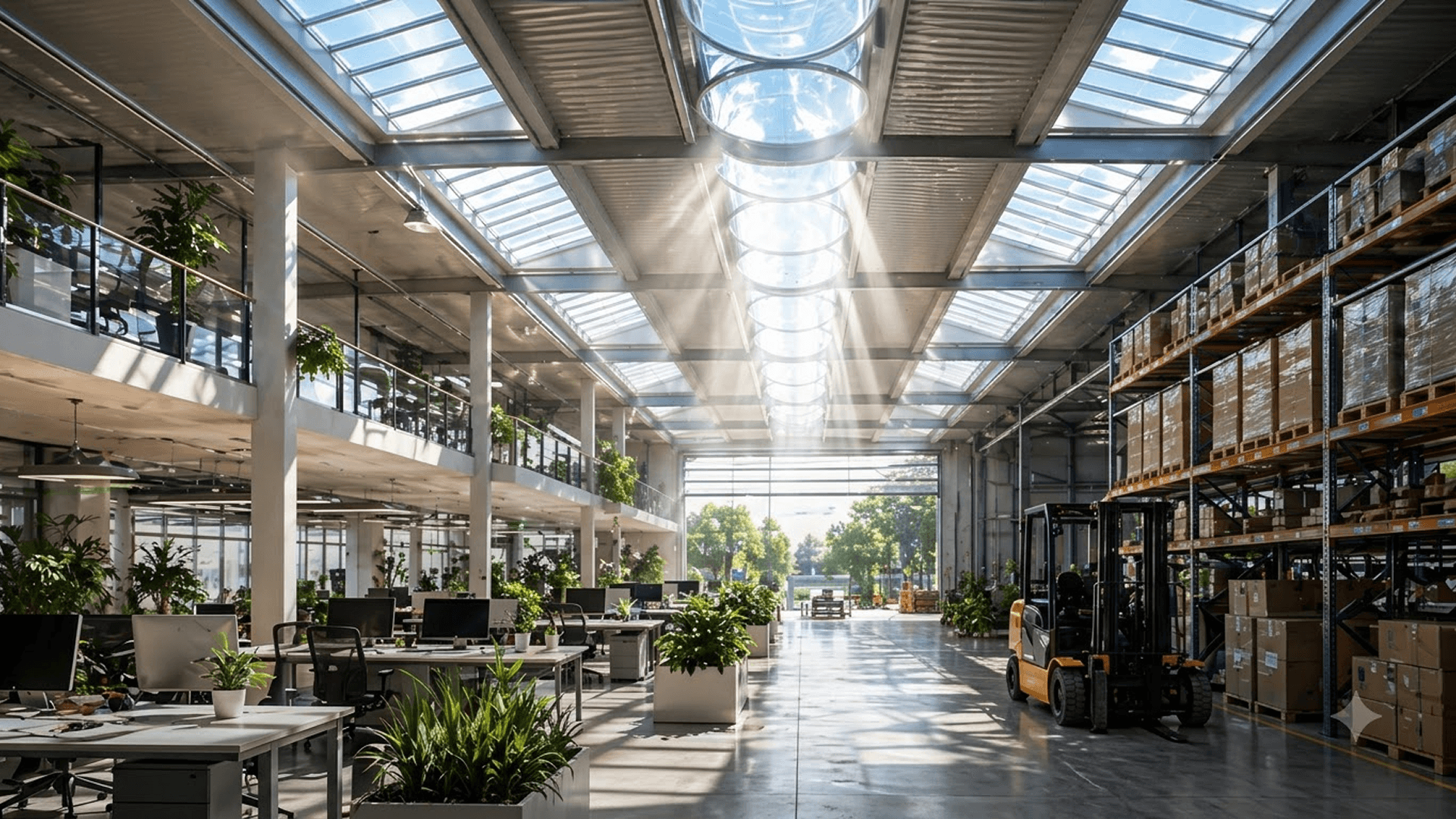
For commercial building daylighting, the decision usually comes down to scale and purpose. Large retail floors, warehouses, and office atriums often benefit from a mix: skylights over open central areas for volume and drama, and lightpipes over back-of-house rooms, corridors, restrooms, and storage areas where energy savings and simple installation matter more than a view.
This hybrid approach is central to modern daylight harvesting systems, where sensors and controls pair with both technologies to dim electric lighting automatically as daylight levels rise - maximizing energy savings across the whole building rather than relying on one system alone.
How to Choose the Right Roof Daylighting System
Ask three questions before deciding:
Is the room directly under the roof, or does light need to travel through an attic or plenum space? lightpipes handle longer, angled runs better than most people expect.
Is energy performance or ambiance the priority? If it's energy savings and consistent light, lean toward lightpipes. If it's a design feature or sky view, a skylight fits better.
What's the budget and timeline? lightpipes suit tighter budgets and faster turnarounds; skylights suit projects where design impact justifies the added cost and installation time.
Bringing Natural Light Into Your Building the Smart Way
Both systems solve the same underlying problem - reducing reliance on artificial lighting - but they solve it differently. Skylights bring in volume, views, and architectural presence. lightpipes bring in efficiency, simplicity, and consistency, especially in spaces where a full skylight isn't practical.
If you're planning a daylighting upgrade, we, at skyshade can help you map out the right mix of skylights and light pipe systems for your specific roof, room layout, and energy goals. Reach out to us at SkyShade for a tailored daylighting assessment and turn your building's roof into one of its most valuable assets.